Review of Tolkien among the Theologians

 (to the main page on Tolkien among the Theologians)
A review of Tolkien amount the Theologians by David Llewellyn Dodds was published in Lembas 211 September 2025 on pp. 6-8.
The original review in Dutch can be read here.
An English translation, kindly provided by Jan van Breda follows:
Tolkien among the Theologians
David Llewellyn Dodds
I hesitated at first. A rather 'heavy-sounding' title — and yet a collection with 'chapters' by various writers whose work I've enjoyed in the past. Well, I've read it from cover to cover with pleasure (and even, for a 'slow reader', quickly). It's instructive, and full of food for thought and for new, yet related insights.
But in what sense or senses 'among'? Austin M. Freeman begins (xi) with a comparison with Saul and the prophets (1 Samuel 10:11-12, 19:24) and contrasts C.S. Lewis as lay theologian. He observes further that the revised symposium papers exhibit attention to different senses of 'among' — for example, Holly Ordway's about four theologians – one in Birmingham and three in Oxford — at least three of whom Tolkien knew personally; or about the works of writers which he knew as literary scholar and philologist, among others, of Boethius. The papers derive from a symposium in the autumn of 2022, about which Freeman's fellow coordinator, Zachery D. Schmoll, wrote a lively blogpost at the time.1) The eleven papers included here are arranged chronologically by the theologians concerned, and more than half of them take advantage of works which have appeared since 2022. The Walking Tree Publishers website provides abstracts of each paper (though my 'security suite' is alarmed by its 'http' instead of 'https').
The theologians are Saints Augustine, Boethius, Francis of Assisi, Thomas Aquinas, John Henry Newman, and John Paul II, and further John Calvin, G.K. Chesterton, Hans Urs von Balthasar, Robert Eaton, Joseph Rickaby, C.C. Martindale, and Martin D'Arcy. The last four are the subjects of Ordway's paper, which constitutes a sort of enriching appendix to Tolkien's Faith: A Spiritual Biography (2023). There, for example, Eaton has about one page, with attention to two of his books, here four pages and another six works – but Ordway is cautious: although we do not know if Tolkien read any of them, "Eaton's writing is valuable as offering insight into the theology being preached, taught, and expressed in pastoral care at the Birmingham Oratory" (180). Such a combination of thoroughness and caution is fairly characteristic of all the papers.
So Freeman, who with a wink describes his paper as "sure to please everyone" (xii), speaks for the most part convincingly of five "convergences between Tolkien and Calvin", "despite Tolkien's nowhere relying on or being influenced by Calvin whatsoever" (91). It reminds me of C.S. Lewis' handling of Augustine and Milton together in A Preface to Paradise Lost – though Freeman points only to Lewis' 1944 foreword for a translation of Athanasius' The Incarnation of the Word of God by Penelope Lawson CMSV (and, curiously enough, only to John Behr's re-use of this frequently reprinted foreword for his own translation from 2014!).
Schmoll tells us (thanks to Cilli's Tolkien's Library) that Tolkien was already busy with Chesterton in 1908-09, with, among others, Orthodoxy, a book which Tolkien still referred to in a 1969 letter (Letters, no. 312). But he also says (130) "that does not mean that Chesterton necessarily influenced specific moments in Tolkien's legendarium." Schmoll's accent is not on Chesterton's attention to "Elfland" in Orthodoxy but to the "Romance of Orthodoxy" with examples from the experiences of Bilbo in The Hobbit and Frodo and Sam in The Lord of the Rings and what he calls (122) "complementary theologies of place."
Keith A. Mathison, attending to Tom Bombadil – that fascinating character both in- and outside The Lord of the Rings — notes (47) that Tolkien, according to Cilli, owned a copy of Chesterton's St. Francis of Assisi (1923). But he goes on to note "This does not prove that Tolkien read the biography". In any case, his thesis is (40) that "Tolkien uses the enigmatic character [...] to absorb Roman Catholic religious elements — and specifically Franciscan spirituality — into the story" of The Lord of the Rings, although he also says (50) "I am not suggesting that Tom [...] is Francis [...], or even a Franciscan." Anyone who wants an immediate sample of his wide-ranging attention to Bombadil can follow his footnote references (43, 51) to earlier posts on his website.2)
Handy for those of us who have not yet read Lisa Coutras' Tolkien's Theology of Beauty (2016) is her paper here, which Freeman (xiii) describes as a "shortened form of her significant work on theological aesthetics in Tolkien and Hans Urs van Balthasar". (Balthasar was 13 years younger than Tolkien, and published Herrlichkeit. Eine theologische Ästhetik in 7 volumes in the 1960s!) Coutras, referring (138) to Tolkien's observation that his "perception of beauty both in majesty and simplicity is founded" upon Our Lady, the Virgin Mary (Letter no. 142), and noting that "Balthasar considers her beauty archetypal", devotes attention to both Galadriel and Eówyn and the "particular beauties" (133) of each in this context – but also, for example, has an eye for the misuse of beauty where the voice of Saruman is concerned (137).
Claudio A. Testi returns to his "two main 'intellectual loves'" (57), Tolkien and Thomas Aquinas (with a footnote reference to six earlier publications). He says (62): "it is one thing to say that Tolkien knew Thomas and […] may have been influenced by him […], but it is quite another to say that the philosophy of the legendarium is Thomistic." Quite the contrary: Freeman (xii) calls Testi's attention to "Ainulindalë", "Mythopoeia", and "Leaf by Niggle" taken together an argument for "a new perspective in theology" on the part of Tolkien.
Craig A. Boyd's and Matthew J.J. Hoskin's papers constitute a sort of diptych. In 'Saruman's Folly and Gandalf's Wisdom: Augustinian Rhetoric in The Lord of the Rings', Boyd devotes attention to a tradition extending from Plato (3) through Aristotle, Cicero, and Augustine (10). He refers (3) to Cilli: "we know that Tolkien possessed Augustine's works in his own personal library" but adds "I make no claim that there is a direct causal link between Augustine's rhetoric and Tolkien's approach". In 'Power and Weakness in Middle-earth: Boethius and Tolkien's The Lord of the Rings' Hoskin says (18) "Because Boethius is a chief transmitter of Platonism to the medieval West, a hinge figure between Late Antiquity and the Early Middle Ages, he is a fitting figure for a consideration of the impact of ancient Christian theology on the works" of Tolkien. And he goes further, writing (18-19) "Indeed, I would venture to say that to whatever degree we may find Tolkien interacting with ancient theology in this volume, or with continental theologians of the Middle Ages, or even with moderns, his production of an imaginative synthesis drawing from disparate sources yet bodying forth a seamless whole is itself truly Anglo-Saxon – and Boethian." (I assume Tolkien on Chaucer, 1913-1959 (2024) appeared too late for Hoskin to mention the abundant evidence of Tolkien's attention to Boethius found there.)
Boyd devotes detailed attention to two of Gandalf and Saruman's conversations with each other at Orthanc – and to Gimli and Théoden's contributions to the second of these – lucidly showing how (14) "Tolkien contrasts Gandalf's pursuit of the true and the good of those in his care [...] with Saruman's obsession with power at any cost."
Hoskin provides complementary attention to Gandalf, Gríma, and Théoden – with Saruman in the background – during Gandalf's second visit to Meduseld (including attention to the richness of Tolkien's treatment of this, in contrast to that of Peter Jackson), and therewith for the interrelations of Théoden and Aragorn. As soon as Théoden (23-24) "has been released from his spell of depression, he finds no rival in Aragorn". Hoskin goes on (25-26) to elucidate the contrast between Théoden and Denethor (also in their relationships with Éomer and Faramir respectively) and, implicitly, between Sauron's use of palantíri and Saruman's use of Gríma – as well as Gandalf's powerlessness against the specific character of Denethor's despair (31-32). On the last page (34), he deepens his attention to the palantíri: "neither Saruman nor Denethor has the power to use them rightly – nor even Sauron, but only Aragorn, a Man who knows who he is, and therefore what he must do". Meanwhile, he has something to say about friendship in the thought of Augustine and Boethius and friendship between (28) "Frodo and his conspirators" and also between "those who would naturally mistrust each other, Legolas and Gimli." And he has a lot to say in discussion with Tom Shippey about how one can best understand (31) "evil in Boethius and Tolkien".
Łukasz Neubauer also provides detailed attention to Denethor's despair – and his decision that follows from it – together with Gandalf's analysis and attempt to convince Denethor (158-59) not to imitate "heathen kings" who were "under the domination of the Dark Power", "murdering their kin to ease their own death". While Neubauer considers it (147) "not improbable that Tolkien might have heard of Wojtyła from his Polish friend Przemysław Mroczkowski […], whose family knew the future pope well", he finds it unlikely (163) that "the teachings of Karol Wojtyła – ethical, social, or other – could have reached, and thus have any kind of influence upon Tolkien". But (148) "there are certain passages, not only in The Hobbit and The Lord of the Rings, which could be used as good illustrations of what […] John Paul II would call the 'Civilisation (or 'Culture') of Life' and the 'Civilisation (or 'Culture') of Death'" – such as (157) "Denethor's Pyre".
Giuseppe Pezzini points (95-96) to a very mysterious aspect of "Tolkien's work and personality": both the "obvious biographical connection" between Newman and Tolkien and the fact that "there are almost no traces in Tolkien's published texts […] which explicitly refer to Newman". He selects two subjects for his investigation (97): "change and secrecy". The masterly result is too rich to give a just impression of it here. He finds Newman's (98) "Christian response to modernity […] neither reactive to nor complacent with it, neither 'conservative' nor 'progressive'" and that of Tolkien similarly (102) "not 'progressive', but certainly not 'traditionalist' either." He presents (101) "Tolkien's view of change with three images": the growth of a seed (comparing Letters nos. 183 and 306); the "sapling of the line of Nimloth" with a comparison of "Leaf by Niggle" (104-06); and "the King's Tree" in Smith of Wootton Major with a comparison of "Ainulindalë" (106-07). He sums up — and begins his second subject (109): "In Tolkien's (and Newman's) view the acceptance of change is thus implicitly founded on a vision of history as the place where God can 'intrude', planting and fostering seeds of hope in the midst of the darkness of evil, in a way which is always secret and unexpected".
He cites Letter no. 131, adding his own italicization, concerning "the motive (to become dominant in Hobbits) that the great policies of world history, 'the wheels of the world', are often turned not by the Lords and Governors, even gods, but by the seemingly unknown and weak — owing to the secret life in creation". And he observes that "This section elaborates material already published" in an article (of 38 pages) from 2019 and "expanded" in a chapter (of 56 pages) in Tolkien and the Mystery of Literary Creation. Here, more briefly, he points to "Ainulindalë" and Letter no. 181 over "intrusions" and "the right to intrude the finger of God", and contrasts Gandalf and Denethor with respect to (111) "the 'secret mission' to destroy the Ring". But "What has all this to do with Newman?" The answer "lies in the Marian subtext of this dominant Tolkienian motive of the 'enhancement of the weak'" and (112) "Newman's devotion for Mary". Quoting Letter no. 79 (114), he writes that "human wisdom […] normally pays attention to Stalin, Hitler, Augustus or Sauron, but forgets 'the seeds germinating in the dark in some forgotten corner,' from Nazareth to Birmingham and the Shire."
Timothy Padgett compares the friendship of Legolas and Gimli with (199) the "cross-denominational friendships" of Tolkien and Wiseman, Gilson, and Smith in Birmingham and thereafter – and later with C.S. Lewis, and both these with all that the "vast majority of Christian groups" have in common, despite "disagreements within the faith" (205-06).
In general, a certain degree of bibliographical freedom works reasonably well for the writers – but, sadly, not all the time. For example, Padgett cites The Lord of the Rings on five pages and Matheson does so on seven pages – while neither of them indicates in his 'Bibliography' which edition he is using. And, to my general annoyance, nowhere in Tolkien among the Theologians is any of Tolkien's works cited other than by page number – and occasionally (where I have easily been able to check) erroneously (for example, Pezzini (109) with respect to Letter no. 79). And, strangely enough, no list of the abbreviations used for the titles of Tolkien's works is provided or indicated anywhere, making every identification a matter of more or less guesswork (and sometimes not such easy guesswork in my experience) – something which one hopes will be remedied in subsequent printings. There is no index, though five blank pages ([216-20]) provide plenty of room for the enterprising reader to make one.
Footnotes
1) https://www.zacharydschmoll.com/blog/great-weekend-at-tolkien-among-the-theologians -> back
2) https:keithmathison.org/post/the-bombadil-enigma and also
https:keithmathison.org/post/the-bombadil-enigma-part-two-the-mroczkowski-letter -> -back
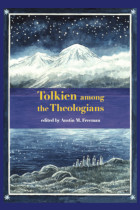
Essays edited by Austin A. Freeman
Language: English | 230 pages
Paperback | € 24,00 (Bol.com)
ISBN: 9783905703535
Zurich & Jena: Walking Tree Publishers | Cormarë Series 53 | 2025
[The review in Dutch which I have translated here appeared in Lembas number 211 (September 2025) published by the Dutch Tolkien Society, Unquendor, on pages 6-8. D.Ll. Dodds, 4 November 2025]

Read other reviews of Tolkien among the Theologians
Read reviews of other Walking Tree Publishers books